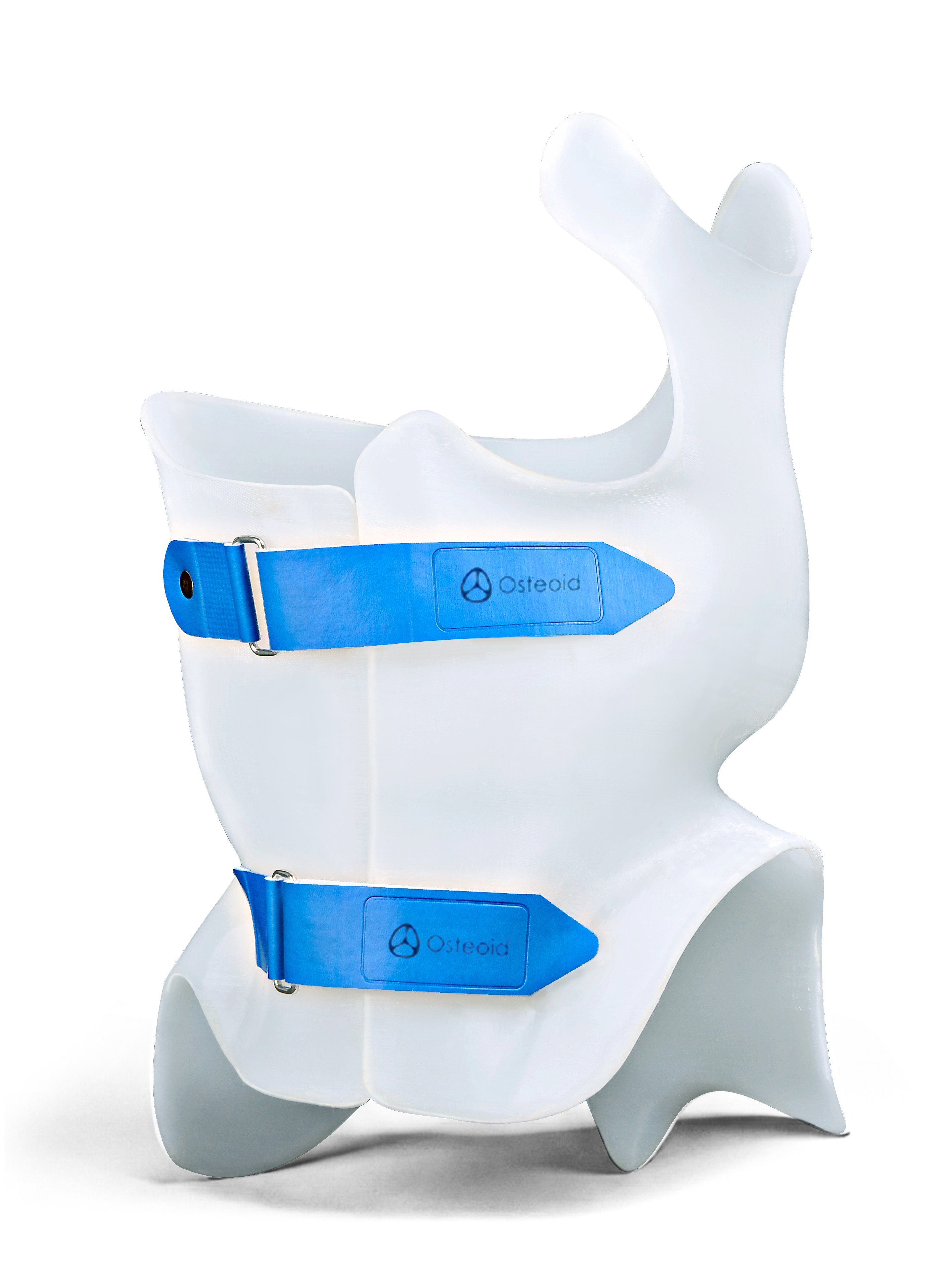
Turnkey solutions powered by AI

Diagnosis

Specialist diagnosis using X-rays and Scoliometer to determine treatment approach.

Diagnosis

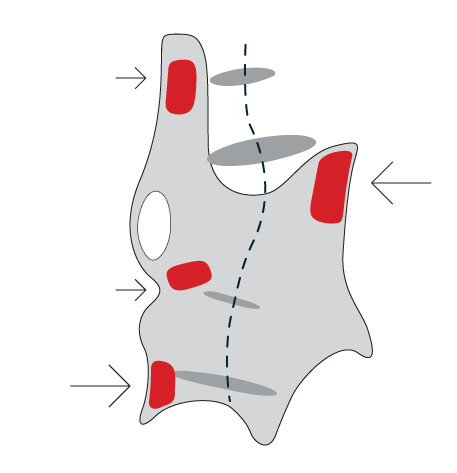
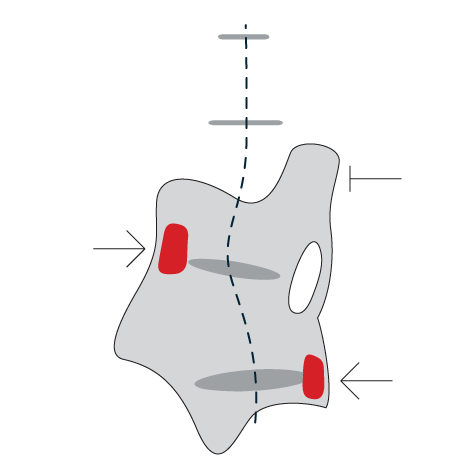
Diagnosis is performed by a specialist (Orthopedics or PM&R) using X-rays and a Scoliometer. If the patient's metrics (Risser scale, Cobb Angle, rotation) suit conservative treatment, they are referred to a specialized Orthopedic Workshop. The orthotist then uses the Cheneau classification to select a base model via our Osteoid software.
3D Scanning

Advanced scanning creates a precise digital twin of the patient's torso in seconds.

3D Scanning

Using advanced handheld or stationary scanners, we capture a sub-millimeter accurate digital twin of the patient's torso. This process is non-invasive, radiation-free, and takes only a few seconds, ensuring patient comfort while providing the precise data needed for a perfect fit.

C.A.D.

Digital sculpting applies corrective forces and pressure points based on X-ray analysis.

C.A.D.

The raw scan data is imported into our specialized CAD software. Here, the orthotist applies specific corrective forces, relief zones, and pressure points based on the patient's X-ray analysis. This digital sculpting phase is critical for ensuring the brace effectively corrects spinal curvature.

3D Manufacturing

High-speed 3D printing creates a lightweight, durable brace without molds or casting.

3D Manufacturing

The approved corset design is manufactured using our company's developed closed-system 3D printer and our high-strength and biocompatible PP material.

Treatment

Orthotist fits the brace and monitors progress with follow-up appointments.

Treatment

The finished brace is fitted to the patient. The orthotist checks trim lines and pressure distribution in real-time. Follow-up appointments and in-brace X-rays are scheduled to monitor progress, allowing for further adjustments to be made by heating or grinding the material if necessary.

Step 1

Diagnosis

Diagnosis is performed by a specialist (Orthopedics or PM&R) using X-rays and a Scoliometer. If the patient's metrics (Risser scale, Cobb Angle, rotation) suit conservative treatment, they are referred to a specialized Orthopedic Workshop. The orthotist then uses the Cheneau classification to select a base model via our Osteoid software.
Step 2

3D Scanning

Using advanced handheld or stationary scanners, we capture a sub-millimeter accurate digital twin of the patient's torso. This process is non-invasive, radiation-free, and takes only a few seconds, ensuring patient comfort while providing the precise data needed for a perfect fit.

Step 3

C.A.D.

The raw scan data is imported into our specialized CAD software. Here, the orthotist applies specific corrective forces, relief zones, and pressure points based on the patient's X-ray analysis. This digital sculpting phase is critical for ensuring the brace effectively corrects spinal curvature.

Step 4

3D Manufacturing

The approved corset design is manufactured using our company's developed closed-system 3D printer and our high-strength and biocompatible PP material.

Step 5

Treatment

The finished brace is fitted to the patient. The orthotist checks trim lines and pressure distribution in real-time. Follow-up appointments and in-brace X-rays are scheduled to monitor progress, allowing for further adjustments to be made by heating or grinding the material if necessary.

Brace library reference image 1
Brace library reference image 2
Brace library reference image 3
Brace library reference image 4
Brace library reference image 5

Brace Library

Tailored Design, Perfect Fit

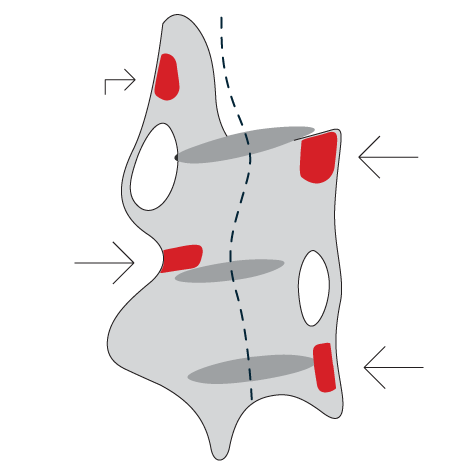
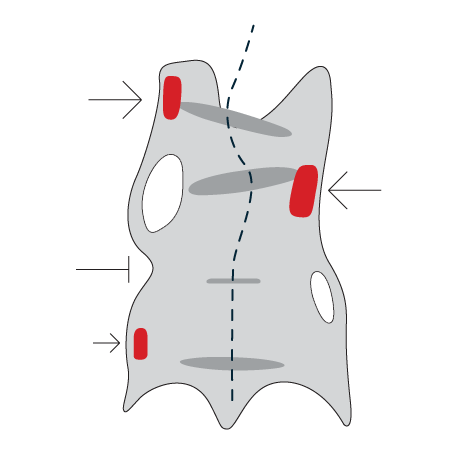
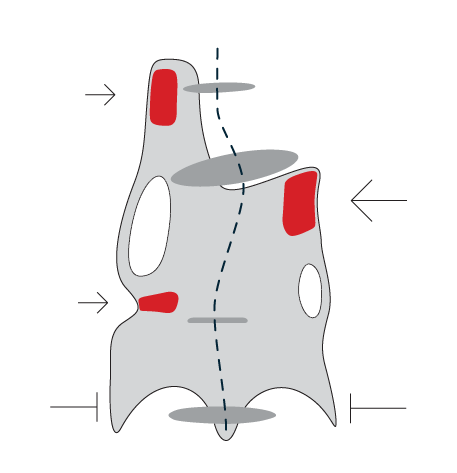
Thanks to decades of experience invested into standardized brace models, we ensure every specific curve pattern is treated with the same biomechanical principles. The core library follows the Schroth method and includes five Chêneau-type scoliosis braces, two kyphosis braces, and a symmetrical post-op brace.

We also empower our partners to parameterize their own designs and ideas by developing custom software solutions.

Artificial Intelligence for Advanced Measurement & Analysis

Experience a new era in orthosis: faster, smarter, and more accessible spinal solutions for every patient, everywhere. Discover how our technology transforms care from diagnosis to treatment.

AI technology for brace classification

Brace Classification

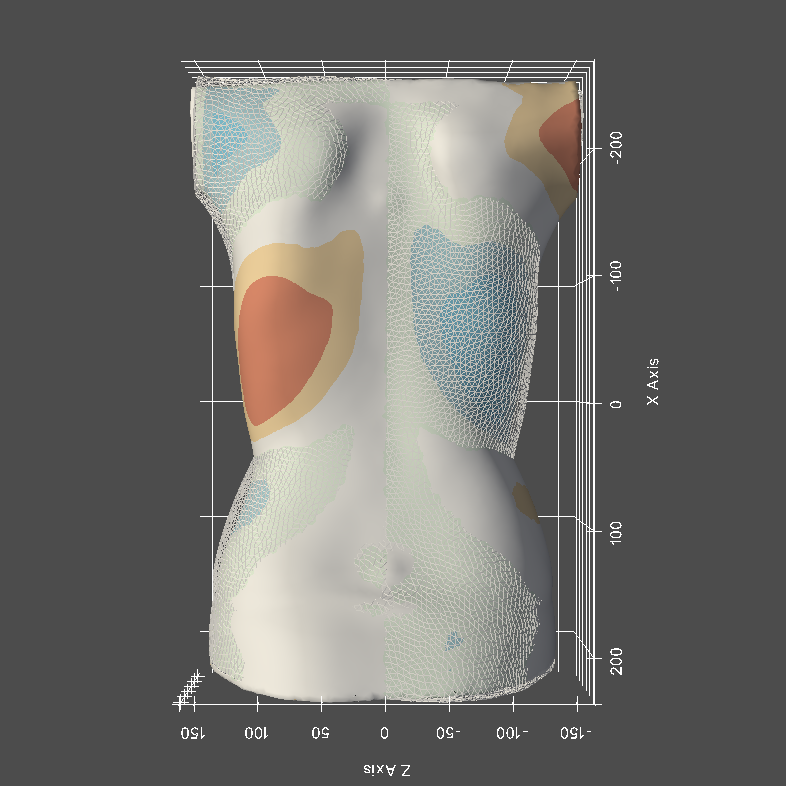
This state of the art model is trained with patient trunk 3D scans which are processed with 3D geometry algorithms and deep learning to make sure that correct brace models are selected for each individual patient.

Osteoid 3D Printer

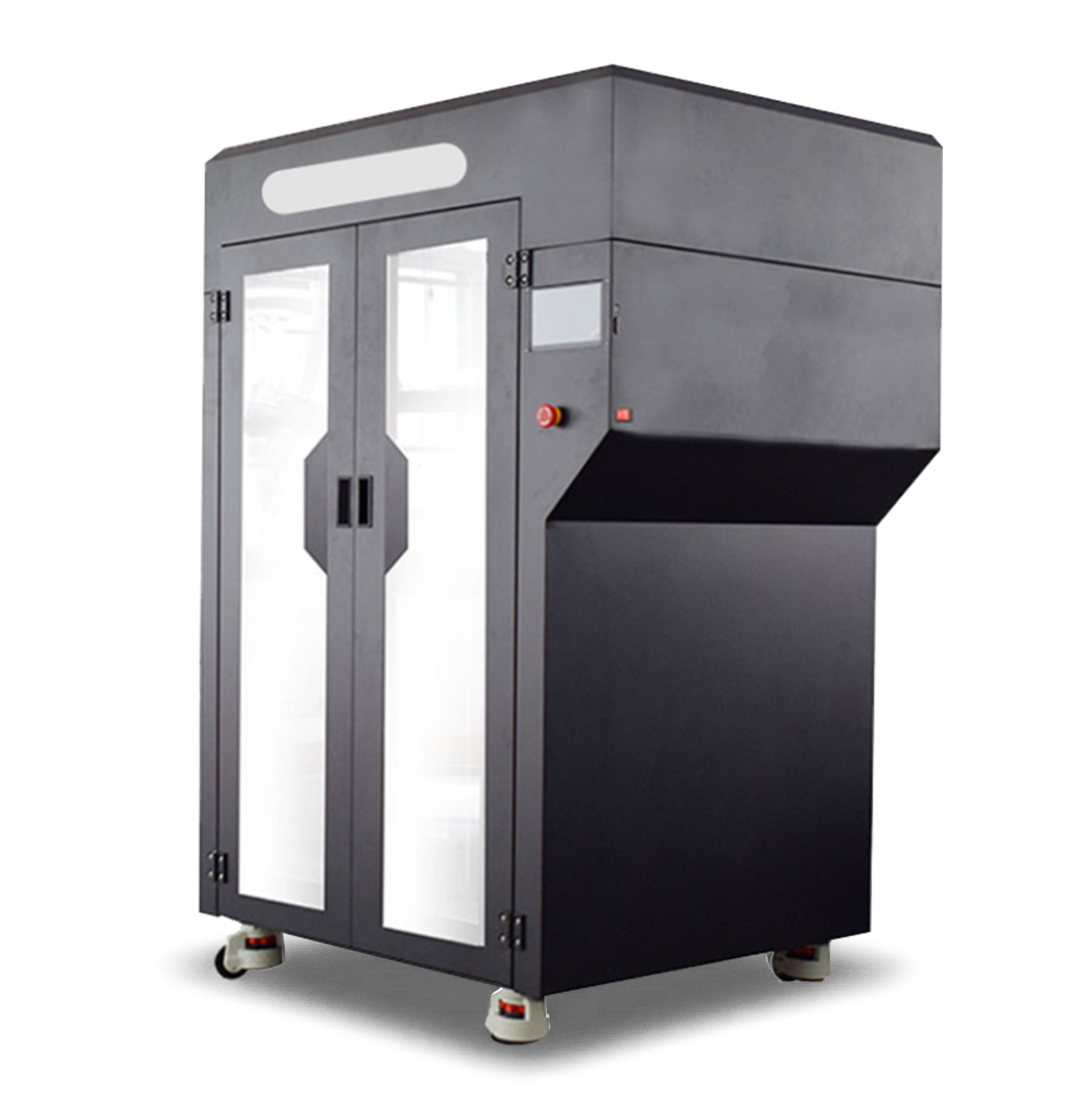
Osteoid's 3D printing solutions are designed to minimize the labor hours and multiple operations associated with traditional manufacturing processes like carving, thermoforming, and waste management. This frees up valuable assets so they can be used elsewhere. Our Osteoid industrial 3D printer is equipped with a dedicated pellet extrusion unit and a specialized thermoplastic material that can be easily cut, milled, and polished with conventional routing machines.

Osteoid industrial 3D printer

Specifications

MethodPellet Extrusion
SlicerOsteoid
MaterialOsteoid PP
Brace Print Time6 to 9 Hours
Printer Volume120 x 90 x 170 cm
Print Volume55 x 55 x 75 cm
Weight195 kg
Temperature Control3 area
Nozzle Diameter3.0 / 3.5 / 4.0 mm
Extruder Temperature0 - 280°C

To acquire the machine, contact info@osteoid.com

Patient wearing a custom Osteoid brace

The new generation of braces is here to expand your library.

Experience a new era in orthosis: faster, smarter, and more accessible support solutions for every patient, everywhere. Discover how our technology transforms care from diagnosis to treatment.

Contact Our Team